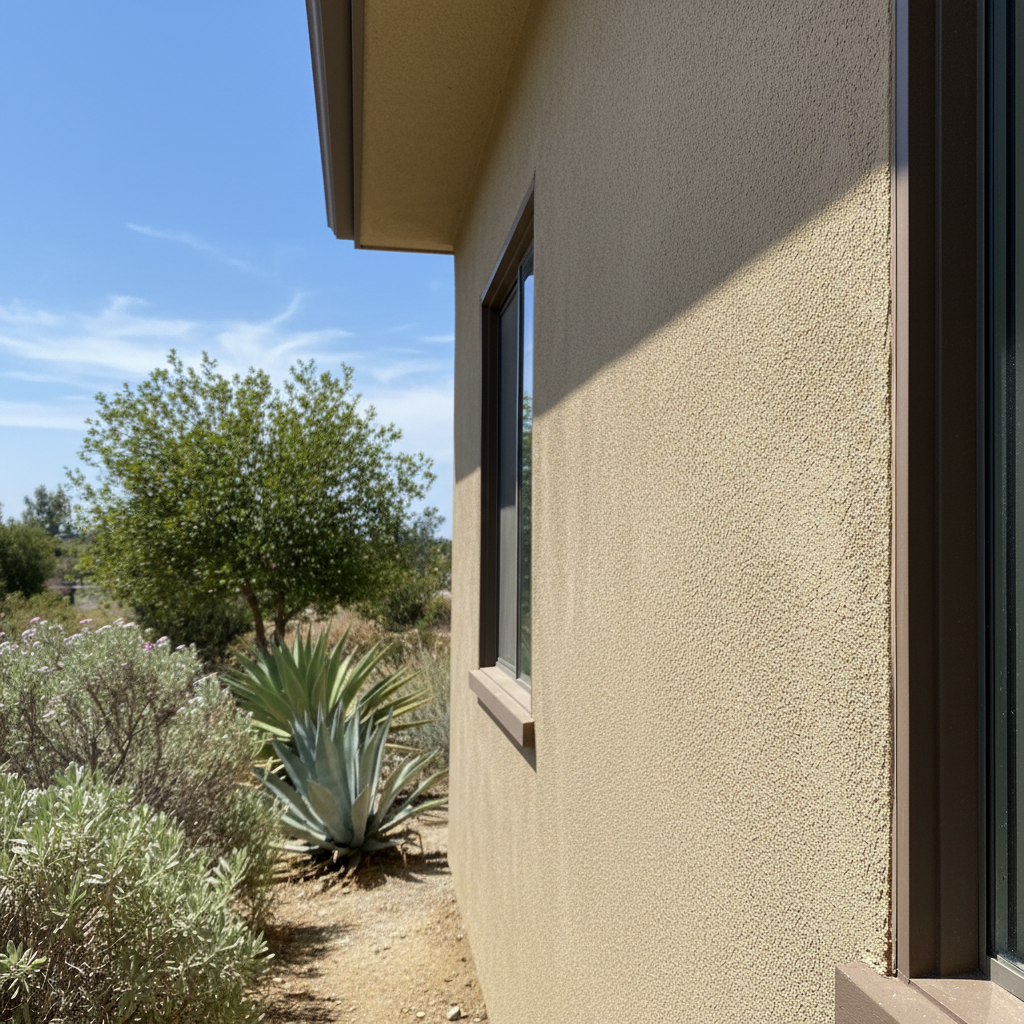
Do I really need special paint for stucco, or can I just use regular exterior house paint?
This is probably the most common question I get, and it’s a good one. Look, you can use regular exterior house paint on stucco, but you really shouldn't. It's kind of like putting everyday tires on a race car — sure, it'll roll, but it won't perform like it should. Stucco is a unique material. It's porous, it breathes, and it expands and contracts with our Diamond Bar weather, especially with those hot summer days and cooler nights.
You need paint that's made specifically for masonry or stucco. These paints are usually elastomeric, which means they're flexible. This flexibility is super important because it lets the paint stretch and move with the stucco without cracking. Regular acrylic latex paint, while great for wood or siding, just isn't built for that kind of movement. It'll crack and peel much faster, especially around windows and doors where there's more stress. Plus, stucco-specific paints often breathe better, which helps stop moisture from getting trapped behind the paint and causing bigger problems later on. It's an investment, absolutely, but it really pays off in how long it lasts and how many headaches you avoid.
What's the most important step in painting stucco? Is it the primer?
Without a doubt, the most important step in painting stucco isn't the paint itself; it's all the prep work. And yes, primer plays a huge role in that. You could buy the most expensive, top-of-the-line stucco paint out there, but if your surface isn't properly prepared, you're just throwing money away. I've seen it happen countless times.
Prep work starts with a really thorough cleaning. We're talking pressure washing to get rid of dirt, mildew, loose paint, and anything else that might keep the new paint from sticking. Then, you've got to fix any cracks or damage. Small hairline cracks need to be filled with an elastomeric caulk. Bigger cracks or areas of damaged stucco? Those need proper stucco repair. You can't just paint over them and expect them to disappear or hold up. After all that, then comes the primer. A good quality, alkali-resistant, acrylic primer is essential. It seals the porous stucco, creates a uniform surface for the topcoat, and helps the paint bond better. Skipping the primer, or using the wrong kind, is a shortcut that always leads to a shorter lifespan for your paint job.
How long should a good stucco paint job last here in Diamond Bar?
If you do everything right — proper prep, quality materials, and skilled application — you should expect a good stucco paint job to last anywhere from 10 to 15 years, sometimes even longer. I've even seen some hold up for 20 years, believe it or not. A lot depends on how much exposure your home gets. If your house is on a hill, taking a beating from the sun all day, or if you're in a spot with a lot of wind-blown dust, that can shorten the lifespan a bit.
The quality of the paint makes a huge difference, too. Those cheaper paints might save you a few bucks upfront, but they rarely last more than 5-7 years before they start fading, chalking, or cracking. With Oasis Stucco, we always recommend and use premium elastomeric paints because we know they'll stand up to our Southern California climate. You also have to consider the original condition of the stucco. If it was already in rough shape with a lot of underlying moisture issues, even the best paint job is just a band-aid.
Can I change my stucco texture when I paint it?
No, not really. Painting stucco doesn't change its texture. The paint basically forms a thin film over the existing surface. If you have a smooth stucco finish, it'll still be smooth after painting. If you have a Santa Barbara finish, it'll still be Santa Barbara. The paint will just follow the contours of the existing texture.
If you want to change the texture, you're looking at a much bigger project than just painting. That would involve applying a new layer of stucco, which we call a re-dash, or potentially even removing the old stucco and applying new. That's a whole different ballgame involving scaffolding, mixing, and skilled plastering work. Painting is about color and protection; texturing is about the physical surface itself.
Is it better to spray or roll stucco paint?
Both spraying and rolling have their place, but for stucco, I almost always prefer spraying, followed by back-rolling. Spraying makes sure you get a really even, consistent coat of paint into all the nooks and crannies of the stucco texture. Stucco isn't flat, and a roller alone can sometimes miss those deeper depressions, especially on rougher textures. When you spray, you get full coverage.
The back-rolling step after spraying is crucial. It pushes the paint deeper into the pores of the stucco, ensuring maximum adhesion and a more durable finish. It also helps to eliminate any potential drips or runs from the spray application and creates a more uniform appearance. Just rolling alone can leave thin spots or an uneven finish, and spraying without back-rolling might not get the paint fully embedded. For the best results on stucco, it's usually a combination of both.
What about color choices? Do certain colors last longer on stucco?
Absolutely, color choice isn't just about how it looks; it can impact how long your paint job lasts, especially here in Diamond Bar where we get a lot of sun. Darker colors absorb more heat. This means the stucco underneath gets hotter, which leads to more expansion and contraction. Over time, this increased thermal stress can cause darker paints to fade faster and and maybe even crack sooner than lighter colors.
Lighter colors — whites, creams, light grays, pastels — reflect more sunlight and heat. This keeps the stucco cooler, reducing thermal stress and helping the paint last longer. They also tend to show fading less dramatically. That's not to say you can't go dark if you love it, but just be aware that it might need repainting a little sooner. Also, always use high-quality exterior paints with good UV resistance, no matter the color. That'll give you the best chance for a long-lasting, vibrant finish.