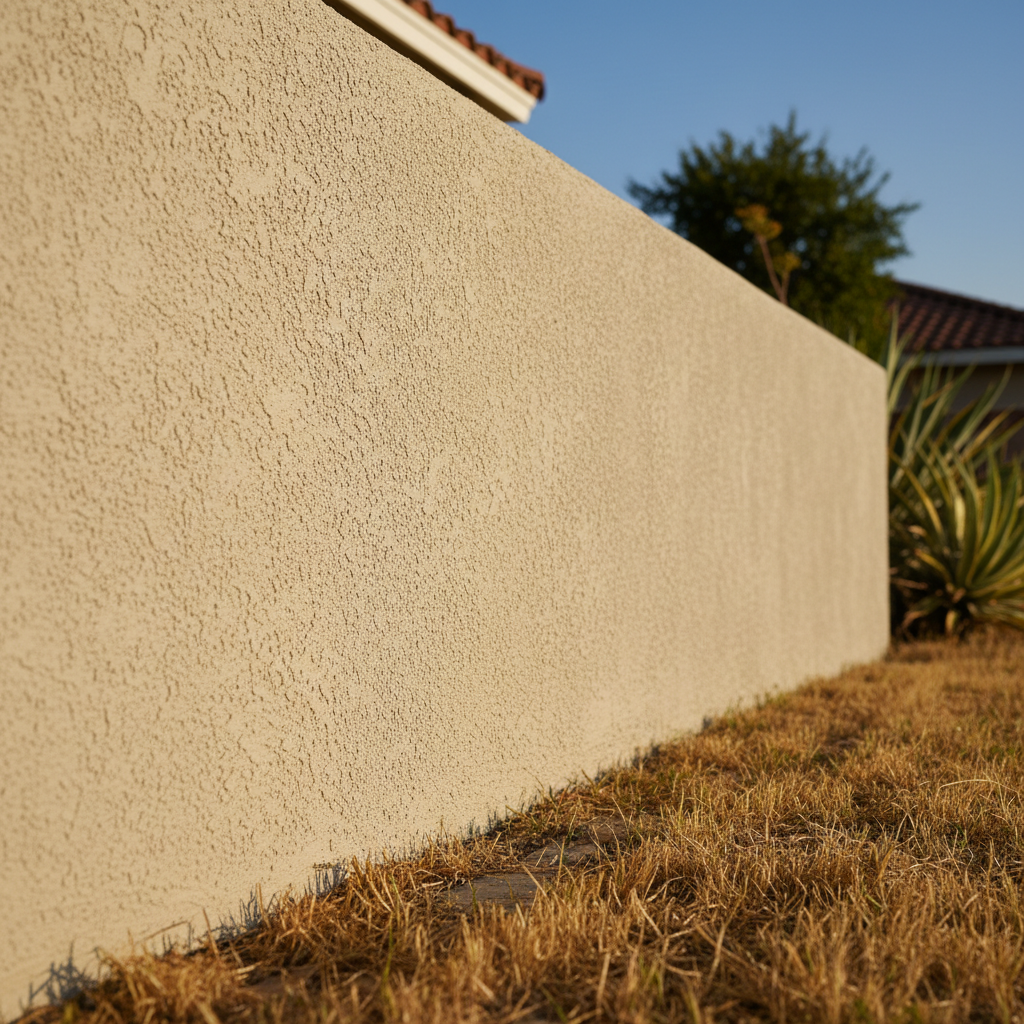
Every home inspection in Diamond Bar, CA starts with a close look at the exterior walls. Stucco is tough, but between the shifting hillside soils in areas like The Country and our dry summer heat, exterior walls take a beating. Most homeowners wait until a chunk falls off to pay attention, but catching problems early saves you money on major repairs. Here is how Oasis Stucco tells homeowners to check their own Stucco before calling in backup.
Before You Start: Grab the Right Gear
Homeowners do not need fancy diagnostic tools for a basic walk-around. Grab a notepad, a camera or your phone to snap close-ups, and a small pocket tape measure to gauge crack widths. Wear comfortable shoes because you are going to walk the entire perimeter of your foundation. Clear away any overgrown ivy or stacked wood so you can actually see the weep screed at the bottom of the wall. If you cannot see the base of the wall, you cannot spot the most important trouble spots.
During the Inspection: What to Look For
Start at eye level and work your way down. You are hunting for three main culprits: Stucco Cracks, Stucco Discoloration, and Stucco Bulging. Hairline cracks under an eighth of an inch wide are usually just normal thermal movement. Do not panic over those. But if you can slide a credit card into the crack or see jagged stair-step patterns near window corners, that is a red flag signaling structural shift or moisture intrusion. Tap gently on the wall with the plastic handle of a screwdriver. A solid tap means the Stucco is bonded tightly to the lath. A hollow, paper-drum sound means the inner layers have delaminated from the frame, which is common in older homes near moisture-heavy zones.
Check the bottom of the wall where the Stucco meets the concrete slab or foundation. That metal strip is your weep screed. If it is rusted through, clogged with dirt, or buried behind fresh landscaping mulch, trapped water has nowhere to escape. That is how wood rot starts behind the walls.
After the Walk-Around: DIY vs. Calling a Pro
Once you finish your notes, separate what you can handle from what requires a specialist. If you find minor hairline cracks on a dry wall, you can patch those yourself with a tube of elastomeric acrylic caulk or a small tub of patching compound. Just make sure you clean out the loose debris first.
Call a professional when you find soft spots, extensive hollow areas, or stains that will not dry out after a rainy week. Oasis Stucco sees homeowners try to paint over bubbling surfaces, only to find the lath rusted clean through underneath. Moisture testing and Stucco Repair need proper tools and matching techniques, especially if you have a custom dash or lace finish that is tough to blend. Take ten minutes this weekend to walk your property and inspect your Stucco in Diamond Bar, CA.